Capture in local languages
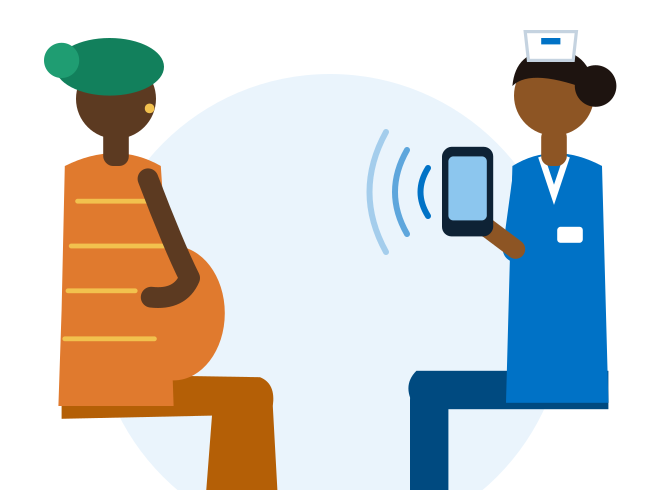
Speech recognition captures patient information in the languages mothers and health workers speak.
Offline-first · Multilingual · AI-powered
Built for remote health posts with no internet. MaternaSave works fully offline and guides nurses, midwives and frontline health workers through each consultation step by step, whatever their level of training or access to specialist support.
Works offline
Captures local languages
WHO and national protocols
SMS referral and HL7 FHIR
01 · The problem
Many maternal deaths follow warning signs that were already there. The health workers who see women first, at health posts and primary health centres, often work with no internet, intermittent power and a basic phone, and without guidance at the point of care.
Uncertainty about what to do next costs time a mother may not have.
Women are sent elsewhere for care that could have been given locally.
When higher-level care is needed, danger signs must be recognised and acted on promptly.
02 · How it works
MaternaSave guides frontline workers through antenatal consultations, structured assessments, danger-sign identification and referral decisions.
Speech recognition captures patient information in the languages mothers and health workers speak.
Structured antenatal assessments built on WHO guidelines and national protocols.
An AI classifier flags potential complications that need further assessment.
SMS-enabled referral and follow-up, with HL7 FHIR records for existing health systems.
03 · Built for the health post
Every step of an encounter runs offline: speech, danger signs, read-aloud, guideline rules and records.
Finished records wait in an encrypted outbox and sync when a connection returns.
Referral notices and replies go by plain SMS. No data plan needed.
The phone only needs a browser; the AI runs on a small local hub at the health post.
Speak instead of type. Everything understood is read back aloud.
Every encounter is an HL7 FHIR record, ready for national health information systems.
04 · Safety by design
MaternaSave guides the consultation and flags risks; the health worker makes the clinical decision.
Built around WHO antenatal care guidelines and adaptable national clinical protocols.
Only information the health worker has confirmed is used for guidance, records or referral.
Advice is never hidden; declining a suggested referral needs a reason.
05 · Next steps
Our focus countries. We will evaluate MaternaSave with clinical reviewers, native-speaker language partners and health facilities before any use in care.
Develop the clinical approach with qualified reviewers and relevant healthcare stakeholders.
Assess safety, usability and whether the product supports appropriate, timely care.
Use the findings to plan a supervised evaluation in a defined care setting.
06 · The team

Co-founder
Medical doctor with frontline clinical experience in Nigeria, bringing a clinical perspective to maternal-care technology.

Co-founder
Experience developing practical technology for settings with limited infrastructure, bringing an implementation perspective to maternal-care innovation.
07 · Partner with us
We are seeking partners to review, evaluate and deploy offline maternal guidance responsibly.
Identify priorities and settings for responsible evaluation.
Contribute frontline insight and support evaluation.
Review guidance and Krio and Yoruba wording.
Support development, evaluation and deployment.
Interested in clinical review, language support, an evaluation partnership or funding? Tell us where your organisation could contribute.